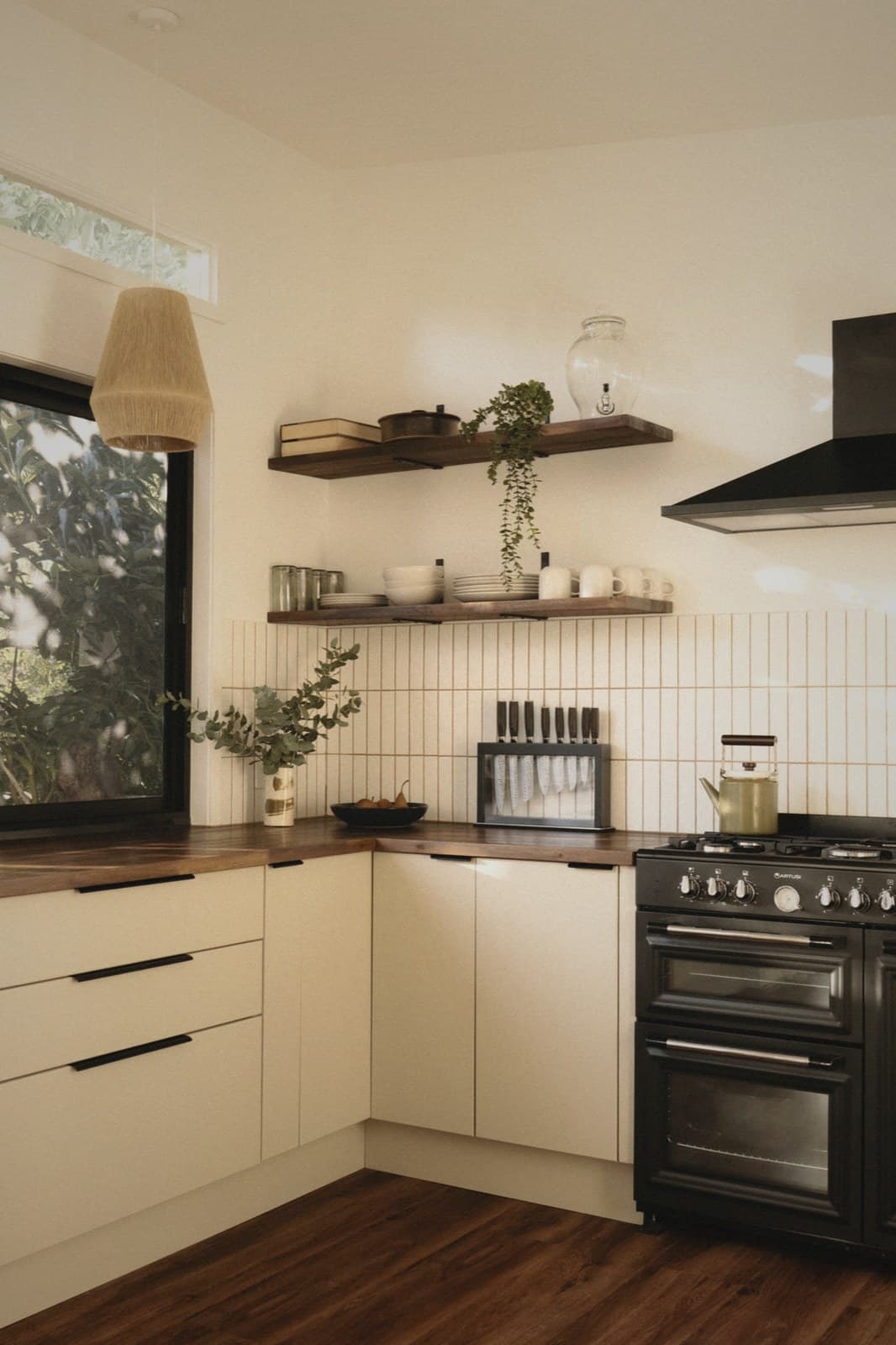
You have probably built one already, or pinned forty versions of it. The family command center: a spot by the back door with a big monthly calendar, a row of labeled bins, a chore chart, a meal board, maybe a little chalkboard for the week's notes. For about three weeks it is glorious. The dry-erase markers still have caps. The chart is current. You feel, briefly, like a person who has it together.
Then a practice gets moved and the wall does not know. The dentist reschedules and the card on the fridge still says the old date. Somebody's game is at a different field this week and that detail lives only in the email, which lives only in your phone, which means it lives only in you. The board on the wall is showing last month, and everyone has quietly gone back to the system that is always current, which is asking you. The command center became decoration.
Why most family command centers stop getting used
It is not a discipline problem and it is not the wrong bins. A physical command center fails for one structural reason: life changes faster than a wall can. A calendar on the wall is a photograph of a plan. The plan moves every day, and a photograph cannot.
- Updates only happen when you make them. Every change has to be erased and rewritten by hand, by you, which means the moment you get busy, the wall falls out of date.
- It lives in exactly one room. The plan is on the kitchen wall, and you need it in the school pickup line, the grocery store, the meeting where someone asks if Saturday works.
- A wall cannot reach anyone. Nothing on it can text your partner that they have Thursday pickup. People have to remember to walk over and read it, and they do not.
- Paper does not know anything. It holds whatever you wrote down and nothing else, so it cannot pull in the school email or flag the double-booked Wednesday on its own.
So the wall drifts, trust in it erodes, and everyone routes back through the one system that is reliably up to date. That system is your memory, which is exactly the thing the command center was supposed to relieve.

What a command center is actually for
Strip away the bins and the chalkboard and the real job of a family command center is simple: it is the one place the whole household is stored, so the plan does not have to live in your head. Judge any command center idea by that job. Does it hold everyone's week in one place. Does it stay current without you rewriting it by hand. Can the other people in your house read it without asking you. Can it reach them with the part they need. A cork board fails most of those. Keep the idea and change what it is made of.
The version that holds: a living digital command center
A command center that actually gets used is built from two pieces, and neither one is a wall.
One shared calendar that holds everyone
The heart of it is a single calendar your partner and older kids can open on their own phones, color-coded by person so a conflict reads in one glance. This is the part the wall was always pretending to be, except it updates in real time, it travels in your pocket, and when the practice moves, it moves everywhere at once. Put the responsible person right in the event title, "Soccer pickup (Dad)," and the calendar answers the question before anyone has to text you it.
A profile of your household your tools remember
The second piece is the part a wall could never do. The standing facts of your household written down once, the names and ages and schools and sizes and doctors and the weekly schedule, in a form your calendar and your other tools can actually read. That is what turns a calendar from a blank grid into a command center that knows things. When the season's dates arrive, they drop into a calendar that already knows which kid, which school, which early-release Wednesday. The information stops living only in you.
Worth knowing
If you love the physical board, keep it, and demote it. Let the wall be a friendly snapshot for the little kids who cannot read a phone yet, and let the real command center be the shared calendar that stays current. The mistake is asking a static wall to be the source of truth for a household that changes every day. As decoration it is lovely. As the system everyone depends on, it was always going to drift.
Build the command center that stays current
The free calendar workflow, The Calendar Cleaner, pulls your scattered schedules into one weekly view, color-coded by person, with conflicts flagged before they reach you. It is the living version of the board on your wall, set up in one pass.
Open the free calendar workflowHow to set it up so it lasts past week three
The reason the wall died in week three was upkeep, so build the digital version to need almost none. A few rules keep it alive.
- Add things the moment you know. When the form comes home or the meeting gets set, it goes on the calendar that minute, not later. Later is where the wall went to die.
- Make people own their own entries. Your partner adds their travel, the teenager adds their shifts and practices. The command center belongs to the household, so the household keeps it fed, not just you.
- Do one weekly look-ahead. Once a week, scan the next seven days for collisions, then send each person their slice. Ten minutes here is what a whole week of texts used to cost.
- Let the dull parts run themselves. Pulling sources together and writing each person's summary is mechanical work a tool can carry once it knows your household. That is the whole point of the profile.
A command center is not a place you decorate. It is a place the plan lives so it can stop living in your head.
What changes once it actually holds
The first thing you notice is that the questions slow down. The what-time-is-the-game text does not come, because the calendar everyone can see already answered it. The card on the fridge with the wrong date is gone, replaced by an entry that updated itself when the dentist moved. You stop being the only person who knows the plan, which means the plan stops depending on you being reachable.
That is the difference between a command center that decorates a wall and one that runs a household. The pretty board asked you to keep it current by hand and quietly punished you when you could not. A living one holds the week, updates as the week changes, and reaches the people who need it, so the load that used to sit in your head finally has somewhere else to live.
Two workflows are free. The full library runs the household.
Start with The Calendar Cleaner, then meet the rest of The Second Shift Method™. Members get the complete library that takes the planning, the remembering, and the coordinating off your plate.
Open the free calendar workflowIf you made it this far
Do you want the free workflow that solves this?
Open the free calendar workflow is free forever, no account required. Takes a few minutes to set up. Runs the coordination that this post was about.
Open Open the free calendar workflow