Mental load
The Mental Load of Motherhood, and How to Finally Put It Down
June 9, 2026/8 min read
It is 9:50 on a Tuesday night. The house is finally quiet. You are lying in bed with your eyes closed, and your brain is reading you a list. Picture day is Thursday, so the green shirt has to be clean. The pediatrician's office never called back about the referral. Your youngest is out of the shoes that fit, and the field-trip money is due Friday, and your mother-in-law's birthday is somewhere next week. You are not doing any of these things right now. You are holding them, the way you hold them every night, so none of them falls.
This is the mental load of motherhood, and the reason it is so hard to explain to anyone is that it does not look like work. It produces no visible pile, no time entry, no finished thing you can point to. It is the quiet, constant background process of running a household from inside your own head. Here is what it actually is, why it sits on one person, and the first real move that takes some of it off you for good.
What the mental load actually is
The mental load is the cognitive work of running a family: anticipating what is coming, tracking the dozens of moving parts, and deciding what happens next. It is not the doing. Packing the lunch is doing. Remembering that the lunch needs to be nut-free, that today is the early-release day, and that there are exactly two slices of bread left is the load. Sociologists who study this call it the difference between the task and the thinking the task is wrapped in. The task is finite. The thinking never clocks out.
It runs in three modes at once. Anticipating, which is living a few weeks ahead of where everyone else is standing, so the camp deadline and the outgrown coat and the dentist's six-month mark get handled before they become emergencies. Monitoring, which is the open dashboard in your mind that knows the current state of everything: who is sick, what is low, which form is outstanding. And deciding, the steady drip of small judgment calls that, on their own, are nothing, and together are the reason you are tired in a way that sleep does not fix.
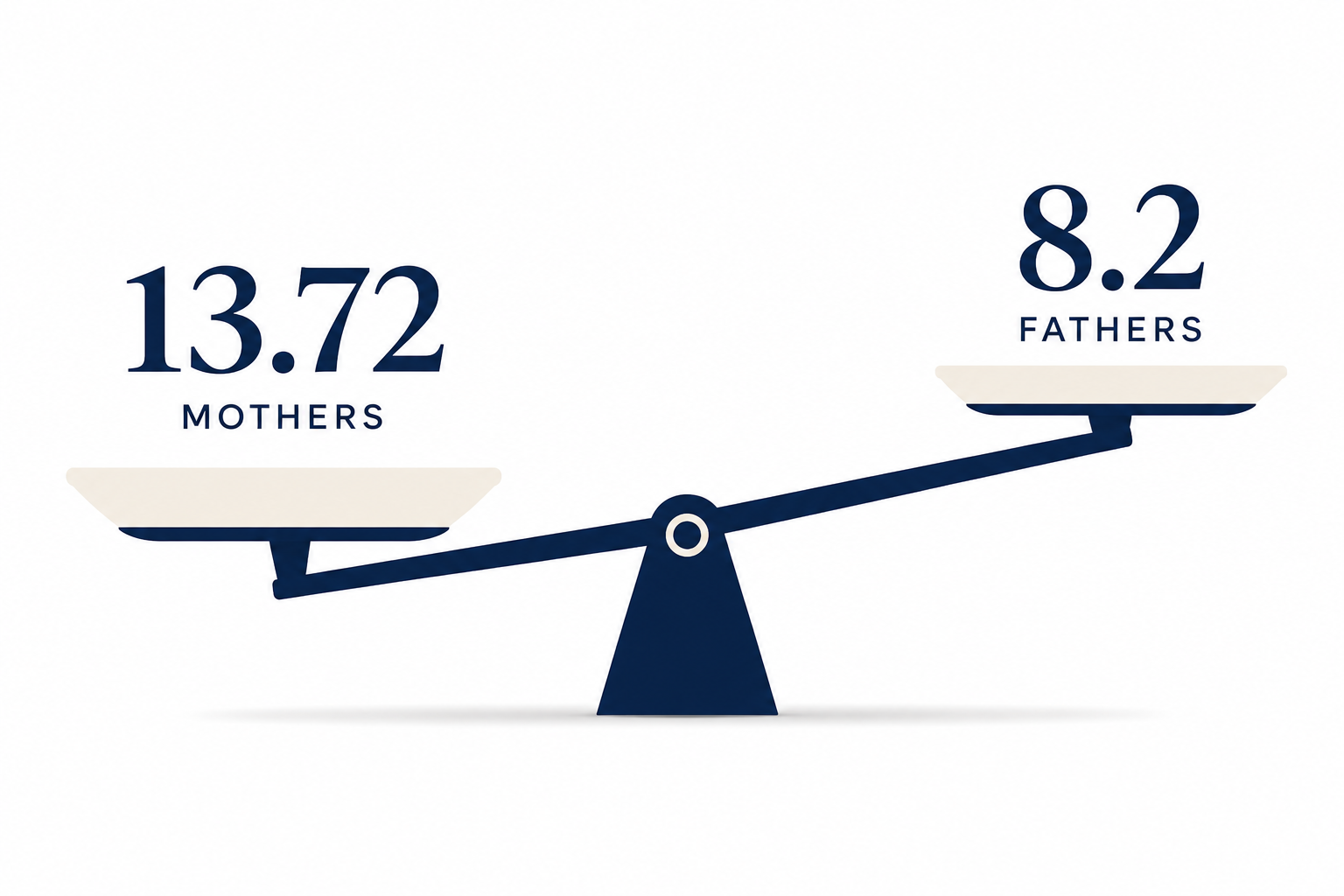
Why it is invisible, and why it lands on one person
A load you cannot see is a load you cannot hand off, and that is most of the problem. When you ask for help, you can ask someone to do a task. You can hand over the grocery run or the bedtime shift. What you cannot hand over in a sentence at the kitchen counter is the years of accumulated context that tells you which size to buy, which night is impossible, and which kid needs the appointment moved. So you keep the context, because keeping it is faster than transferring it, and keeping it is exactly the part that exhausts you.
Over time the household quietly routes everything to whoever holds the most context, and once that is you, it stays you. The school updates your number. The other parent asks you where the soccer cleats are, because you are the one who would know. Each handoff that does not happen makes the next handoff harder, because the gap between what you carry and what anyone else carries only widens. The load concentrates on one person not because that person is more capable. The system has nowhere else to put it.
Worth knowing
The fastest way to test where your load lives is to imagine being out of reach for three days with no phone. Everything that would quietly fall apart is a thing currently stored only in your head. That list is your real job description, and almost none of it is written down anywhere but you.
None of this is a character flaw, and it is not a sign that you are bad at delegating. You are running an operation that has never been written down, with a single point of failure, and that single point is your memory. No business would run this way on purpose. The fix is not to try harder or care less. The fix is structural, and it starts in one specific place.
The first move: get the standing facts out of your head
Most of what taxes you is not new information. It is the same standing facts, re-loaded a hundred times a day. The kids' birthdays and shoe sizes. The teachers' names and the school's early-release schedule. The pediatrician, the dentist, the insurance details, the allergy, the sitter's number, the foods that cause a meltdown. These rarely change, yet you carry them live, because every workflow in your week assumes you already know them. That re-loading is a tax you pay on every single decision, and it is the cheapest part of the load to eliminate.
The move is to put those standing facts somewhere outside your head, once, in a form other people and tools can actually use. Not a planner you have to maintain. Not an app that asks you to start over every Sunday. A single, written profile of your household that holds the things that stay true, so they stop renting space in your attention. When the facts live somewhere real, your brain gets to stop being the database and goes back to being yours.
What goes in it
Start with the people. Each child's full name, age, school, grade, and teacher. The standing weekly schedule, the activities, the pickup logistics. Then the facts that travel with each person: the allergies, the sizes, the doctors, the medications, the things that reliably go wrong and how you head them off. Then the household itself: the regular bills, the key dates, the people you call when you need backup. You are not writing a memoir. You are writing down the answers you already give, all day, so you only have to give them once.
This is exactly what the Family Profile is built to capture. It is a free, one-time setup that walks you through your household and stores the standing facts in one place, so the work of remembering stops being yours alone. It takes one sitting, and it is the difference between carrying the operation and running it.
Get the standing facts out of your head
The Family Profile is a free, one-time setup that captures your household once and holds it in one place, so the remembering stops being yours to carry alone.
Set up your Family Profile (free)What changes once the facts are written down
The first thing you notice is a kind of quiet. The nightly list gets shorter, because the items that used to need your memory now have a home that is not your memory. You stop being the only person who can answer the question, which means the question stops always coming to you. The load does not vanish in a week. It starts to move, and it can only move once it is somewhere another person, or a workflow, can pick it up.
The second change is leverage. Once your household's standing facts exist in one place, every other piece of the week gets easier, because nothing has to start by asking you what it should already know. The meal plan knows the allergy. The calendar knows the early-release day. The school email gets handled without a five-minute archaeology dig through your own brain first. Writing the facts down once is the on-ramp, and everything downstream rides on it.
You were never disorganized. You were the only copy of the plan, and the plan was never written down.
Putting the mental load down does not mean caring less about your family. It means you stop being the single fragile place all the information lives, so you have room left over for the part of motherhood that is not logistics. The weight was real. It was just never meant to be carried in your head, where you could neither see it nor set it down.

If you do one thing this week, make it this: take the standing facts out of your head and put them somewhere real. The Family Profile is free, it takes one sitting, and it is the on-ramp to the rest of The Second Shift Method™, the workflow library that members use to take the invisible work off their plate one piece at a time. Start with the facts. The relief follows the facts.
Put the load down, one piece at a time
Two workflows are free to try. Members get the full library that carries the planning, the remembering, and the coordinating alongside you.
Start free with the Family Profile