It is 10:15 on a weeknight and you are still up, because you are the one who is always still up. The other adult in the house went to bed an hour ago, untroubled, and is genuinely a good partner. You are at the table closing the day's open loops: replying to the teacher, moving tomorrow's pickup because of the late meeting, ordering the size your kid just outgrew, adding the birthday party to the calendar before you forget it exists. None of it is hard. All of it is yours. It has been yours so long that nobody, including you, remembers deciding it would be.
You are the default parent. The phrase caught on because it names something real: in any household, one person becomes the one the whole system routes to by default. The school calls you. The other parent asks you where things are. The sitter texts you. Here is why that happens, why the usual fixes do not stick, and how to actually hand pieces of it off so they stay handed off.
The default parent is a routing problem, not a willingness problem
It is easy to assume the imbalance is about effort, that one parent does more or cares more. Sometimes that is part of it. More often, the deeper cause is information. You became the default because somewhere along the way, you became the place all the household context lives. The current shoe sizes. The doctor's name. The friend whose house is fine and the one whose is not. The exact reason Wednesdays are impossible. Once one person holds the operating picture of the family, every question has an obvious destination, and that destination is her.
Here is the part that traps you: you cannot delegate what only you know. You can ask your partner to handle the dentist, and forty seconds later you are answering which dentist, what insurance, when the last visit was, and that your son needs the early slot because he falls apart after lunch. By the time you have transferred enough context for the task to actually happen, you could have done it twice. So you do it, because doing it is faster than explaining it, and the doing quietly confirms, one more time, that you are the only one who can.
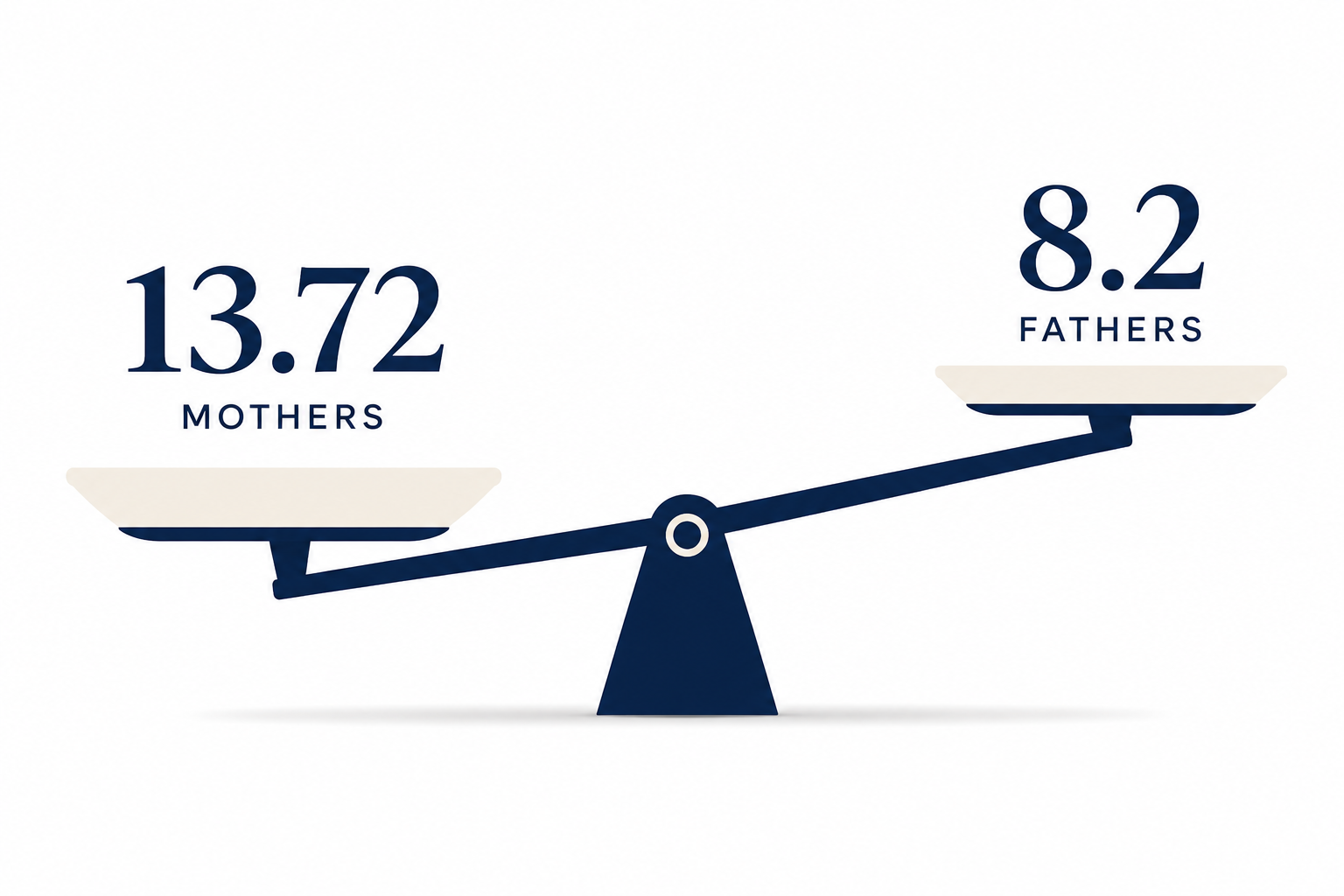
Why the usual fixes do not hold
Most attempts to even this out fail the same way. You delegate a single task, in the moment, under pressure, and the handoff carries no context with it, so it bounces back to you with questions or comes back done wrong. A shared to-do app helps for a week, then drifts, because it still depends on you to load every item and every detail. A big conversation about fairness changes the mood for a few days and changes the routing for none of them. The pattern reasserts itself because the underlying cause, that the context lives in one head, was never touched.
The goal is not to assign more tasks. It is to make the context shared and external, so another adult can pick up a whole area without first downloading it from you. When the information is sitting somewhere both of you can reach, a task can leave your plate and actually stay gone, because the person who takes it has everything the task needs and does not have to come back to the source. The source was the problem. Stop being the source.
Move from delegating tasks to handing off domains
Instead of farming out individual errands, hand over an entire area and let it belong to someone else. Sports logistics. Medical appointments. The school relationship. When a whole domain moves, the mental load of it moves too, the watching and remembering and deciding, not just the visible chore. The catch is that a person can only own a domain if they have the information the domain runs on. Which means the handoff has to start with making that information visible.
Write the context down before the conversation, not during it
The reason the fairness talk never works is that you are trying to transfer years of accumulated detail out loud, in real time, while tired. It does not fit through a conversation. Put it in writing first. When the schedule, the sizes, the doctors, the standing facts of your household already exist on a page both of you can open, the conversation stops being a download and becomes a simple question of who owns what. You are not asking your partner to read your mind. You are handing them the manual.
Worth knowing
A clean test of a real handoff: after you hand off a domain, the other adult should be able to handle the next thing in it without texting you a question. If every handoff still routes back to you for one detail, the context never actually moved. It is still in your head, just with extra steps.
Move the context out of your head
The Family Profile is the free, one-time setup that puts your household's standing facts in one shared place, so another adult can finally pick up a whole domain without coming back to you for the details.
Set up your Family Profile (free)Build one shared source of truth
The thing that makes all of this possible is a single place where your household's standing facts live, outside your head, where both parents and any tool can reach them. This is the whole idea behind the Family Profile, a free one-time setup that captures your household once: the kids' names, ages, schools, and schedules, the allergies and sizes and doctors, the recurring logistics that currently exist only because you remember them. Once it is written down, the information stops being yours by default. It becomes shared, which is the precondition for the load being shared.
With one source of truth in place, the handoffs finally hold. Your partner takes the medical domain and has the pediatrician, the insurance, and the history right there, so the appointment gets made without a question routed back to you. The sitter gets the profile and stops needing you on speed-dial. Every workflow you run starts from a household that already knows itself, instead of starting by asking you. You stop being the human index for your own family.
You can only stop being the default parent when the other adult can answer the question, and they can only answer it once the answer lives somewhere other than your head.

Stepping out of the default role is not about caring less or keeping score. It is about refusing to be the single point of failure for an entire household. Make the information shared, hand off whole domains instead of stray tasks, and let the load settle where it can actually be carried by more than one person. Start by getting your household out of your head and onto a page. The Family Profile is free and takes one sitting, and it is the on-ramp to The Second Shift Method™, the workflow library members use to keep moving the load off their own plate. The handoff begins the moment the context stops being a secret only you keep.
Stop being the single point of failure
Two workflows are free to start, no account and no card. Members get the full library that helps move whole domains of the household off your plate for good.
Start free with the Family Profile