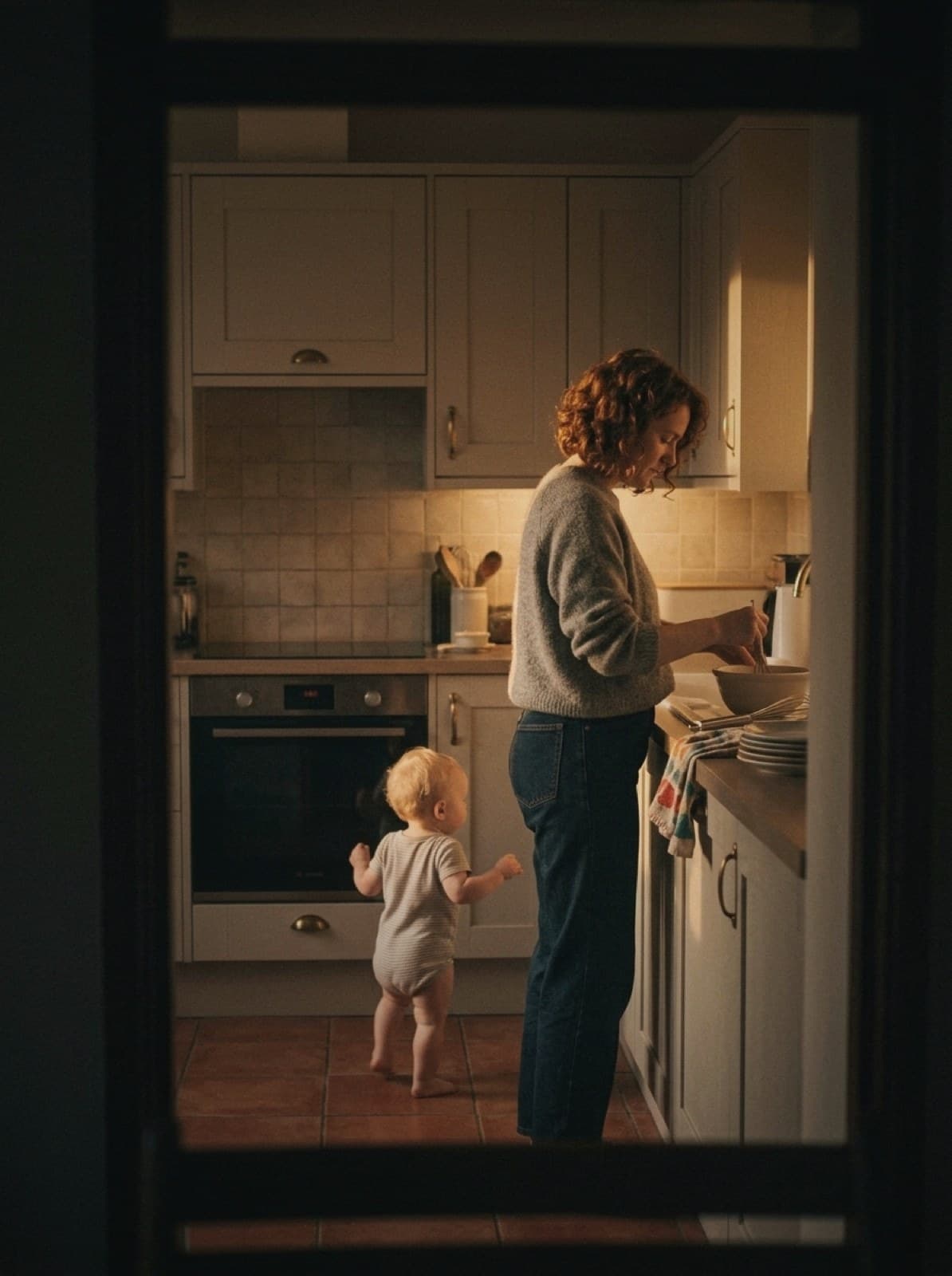
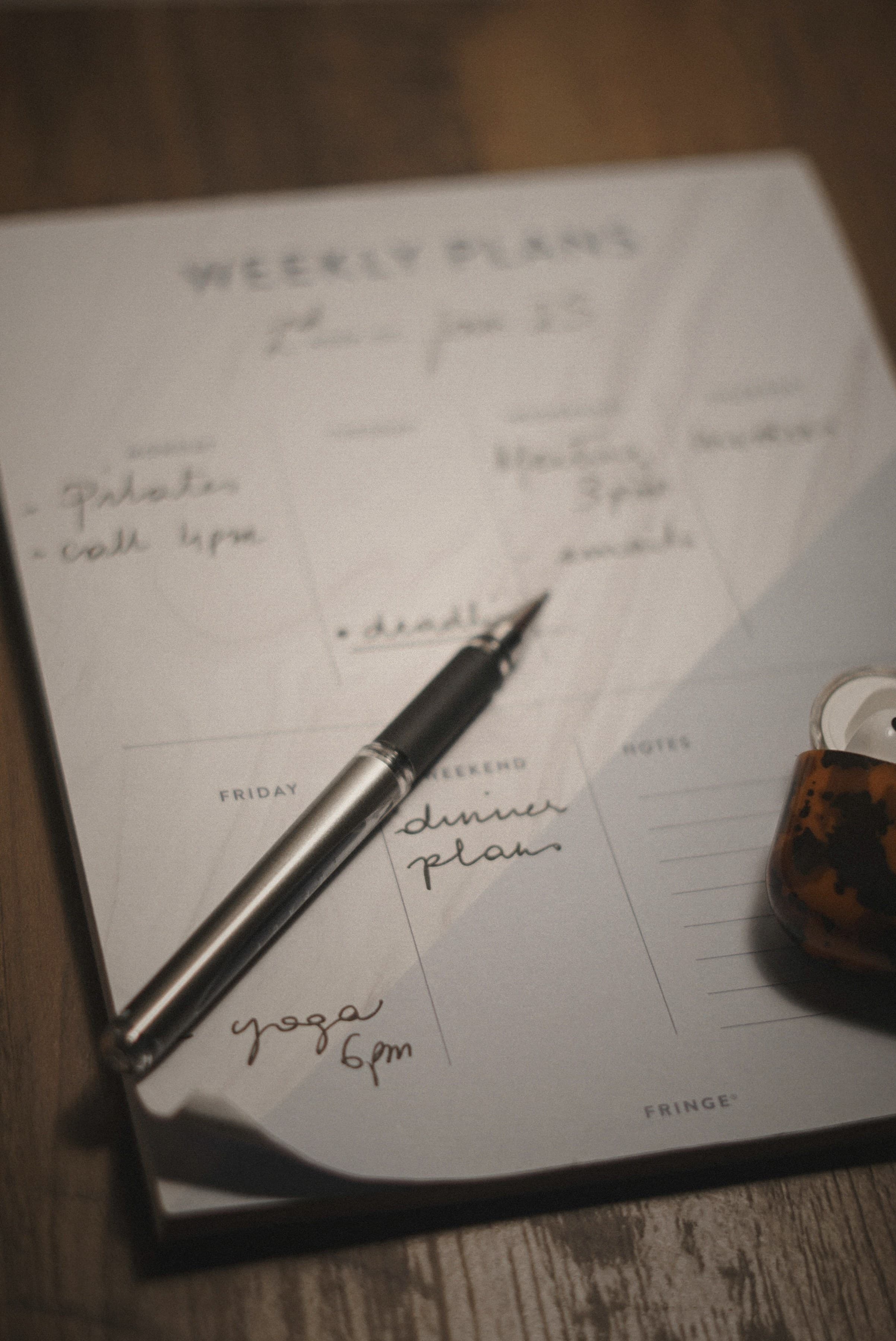
It is 8:14 on a Sunday morning. The coffee is hot, the house is still quiet enough that you can hear the fridge hum, and there is a decision in front of you. Ten minutes now planning this week's dinners, or seven evenings of your life spent being asked what is for dinner and improvising an answer in front of an open refrigerator. Framed that way, ten minutes is a rounding error. The problem was never the ten minutes. It was that every meal-planning method you have ever tried asked you to spend forty on a Sunday, use a color-coded spreadsheet, and cook a French braise on the night of the 6:30 practice.
Learning how to meal plan in 10 minutes is a sequencing trick. Ten minutes is enough time to answer the five questions your brain gets asked at the fridge, in one sitting, in a room where nobody is asking them out loud. When they get answered on a Sunday, they do not get re-asked on a Wednesday, and the Wednesday version of you gets her evening back.
Why ten minutes works
Eve Rodsky's Fair Play framework calls out something meal-planning books skip. Every household task has three parts. Conception is noticing that dinner needs deciding at all. Planning is figuring out how. Execution is doing it. The weight lives in the first two. Cooking is Execution. Meal planning is Conception plus Planning, compressed. That is why the person who cooked dinner is often not the one most fried by the end of the day. The one who has been deciding all day is. And dinner is where deciding lands hardest.
Allison Daminger, in her 2019 research on the cognitive labor of couples, found that mothers do more of the noticing and the monitoring even in homes where partners share decisions and chores fairly. The visible half of the work looks even. Underneath it, the invisible half stays with her. Meal planning is a small, daily place where that invisible half shows up on cue. Nobody but you is tracking which nights are rushed, who is going to be at the table, or what is already thawing in the fridge. When the household leaves those threads open, your brain runs them all week, on a loop.
Ten minutes is enough because the work is deciding. Cooking is a different job. Sitting at a table on Sunday, with a piece of paper or your phone, and answering the five questions in one clean pass takes less time than reading a menu, if you go in the right order.

The five questions, in the order you can answer them in ten minutes
The order matters. Most meal-planning attempts collapse because they start with the recipe search. Recipe browsing is the most fun step and the most time-hostile. Turn it loose and it will eat forty-five minutes. It is also the wrong first step. You have not looked at your actual week yet, or your actual kitchen. You are shopping for a life you do not live. Fix the sequence, and the whole thing gets fast.
1. Look at your week first, in two minutes
Open your calendar, or picture it. Where are the rushed nights this week. Which one has a game or a late meeting. Any nights with someone gone or coming home late. Look for the one lonely night that has forty-five minutes and a decent mood. Do not pretend Wednesday will be easy if Wednesday has practice at six. The plan bends around the week you are having, no matter what the ideal one looks like.
2. Take inventory in two minutes, without leaving your seat
Walk your fridge and pantry with your eyes, from your chair. What protein is thawed or thawing. Anything a day from turning. Half-used jars of sauce that are quietly guilting you. Count what is already home. This step is where the plan meets reality, and it is why the plan does not send you to the store for things you already own. It is also where the food-waste line in the family budget starts shrinking without anyone announcing it.
3. Pick five dinners, not seven, in three minutes
Planning all seven nights is how you feel behind by Thursday. Plan five. Leave two open on purpose, for leftovers, for breakfast-for-dinner, for the night the plan flexes because the day did. Draw from the short list of ten dinners your family will eat. Real ones. Skip the aspirational ones. Most weeks are some shuffle of those ten plus one small experiment on the night with forty-five minutes.
4. Let the grocery list fall out of the plan, in two minutes
The grocery list is the exhaust of the plan you just made. Once the five dinners are on the page, the list is their ingredients minus what your two-minute inventory said was already home. Sort it into produce, meat, dairy, pantry, and freezer so you are not zigzagging across the store. Paprika Recipe Manager ($5 one-time on your phone) pipes recipes straight into an ingredient list without you retyping anything, and it earns its five dollars back the first week. If you would rather not pay, Whisk, now called Samsung Food, does the same job free.
5. Pin the plan where 5:47 you can see it, in one minute
The plan does not exist for Sunday you. It exists for the version of you who walks in the door with her coat still on at 5:47 on a Wednesday, and needs the answer already visible. Stick it to the fridge. Set it as your phone's lock screen. Text it to your partner so it lives in the family group thread. Whatever gets it out of your head and onto a surface anyone in the house can look at.
Get five dinners and a sorted list in one pass
The Meal Planner is one of the free workflows on the site. You tell it your real week, who you are feeding, and what is already in the kitchen. It comes back with five weeknight dinners matched to your nights, a grocery list sorted by aisle, and a short prep note for anything worth doing ahead. Ten minutes, no card, no catch.
Open the free workflow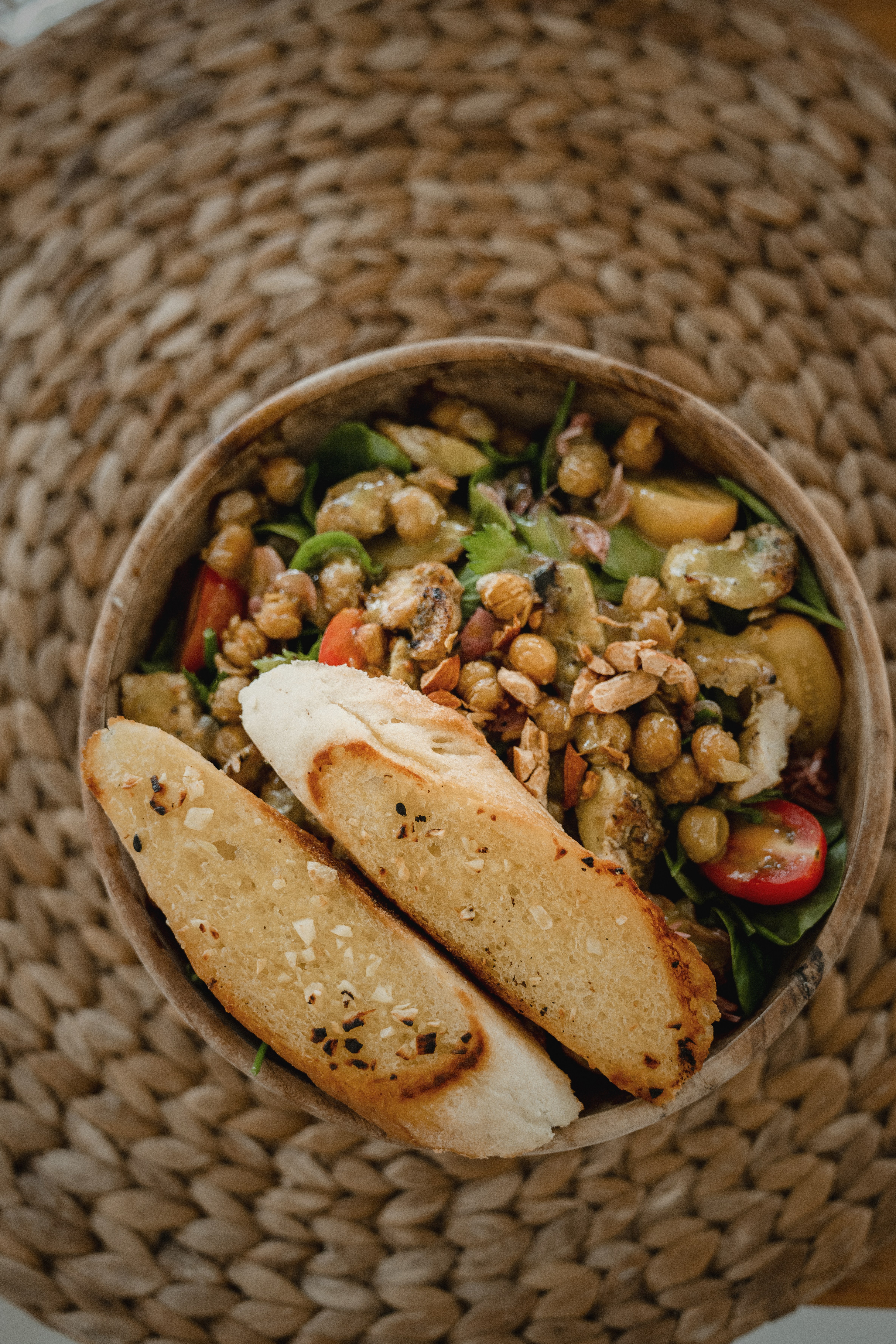
Nobody asks what is for dinner, because the answer is already on the fridge.
What ten minutes will not do for you
It will not turn you into a person who cooks like Ina Garten. Thursday will still have practice at six. The four-year-old will still negotiate about the peas. Your eight-year-old will still ask about takeout even with a chicken thawed on the counter. Ten minutes is one small system doing one small job. What it does is stop taxing your prefrontal cortex all week for a decision you could have made in one sitting on Sunday.
Rebecca Hartley's 2017 book Fed Up made a related point. Hiring a cleaning service did not lift the load, because she was still the one who had to remember it was Tuesday. Meal planning is the same shape. Downloading a recipe app does not lift the load if the app hands the deciding back to you at 5:47. Ten minutes on a Sunday lifts the load because the deciding is already done, and 5:47 you is not the person you were asking to do it.
Worth knowing
The goal here is to stop staring into the fridge. Variety is not the point. A short list of ten dinners your family will reliably eat, in rotation, is how professional kitchens plan and how tired families make it through a Tuesday.
The Wednesday payoff, in the language of a real week
The change is small and boring, which is usually the sign that it is real. Wednesday at 5:47 in the old version of your life is you standing with the fridge open, running six mental threads at once, hoping something obvious will appear on a shelf. In the new version, that same Wednesday at 5:47 is you glancing at the plan on the fridge, reading the words "chicken, sheet pan, broccoli," and knowing everything on that list is in the house because Sunday you did the ten minutes. You start cooking without having to think first. The six threads are still there. They live on a page now, where they belong.
The other change is quieter, and over months it is bigger. You stop resenting the fridge. Sunday night stops being a mental replay of what is thawing. You are no longer the household's operating memory for its next meal. That attention comes back to you, and you get to spend it on whatever you have been trying to have the attention for in the first place.
The reframe, and the on-ramp
The point here is being one adult who quit running the dinner department out of her own head. Nothing more romantic than that. The 10-minute number is honest math. Five decisions made in one calm pass instead of scattered across a whole week of tired ones. The method has been sitting in front of you the whole time, waiting for someone to hand you the sequence.
Try the ten-minute version this Sunday
The Meal Planner walks you through the sequence in real time and hands you the plan and the list at the end of it. Free forever. Try it once and see what a planned Wednesday feels like.
Open the free workflowIf you made it this far
Do you want the free workflow that solves this?
Open The Meal Planner is free forever, no account required. Takes a few minutes to set up. Runs the coordination that this post was about.
Open Open The Meal Planner